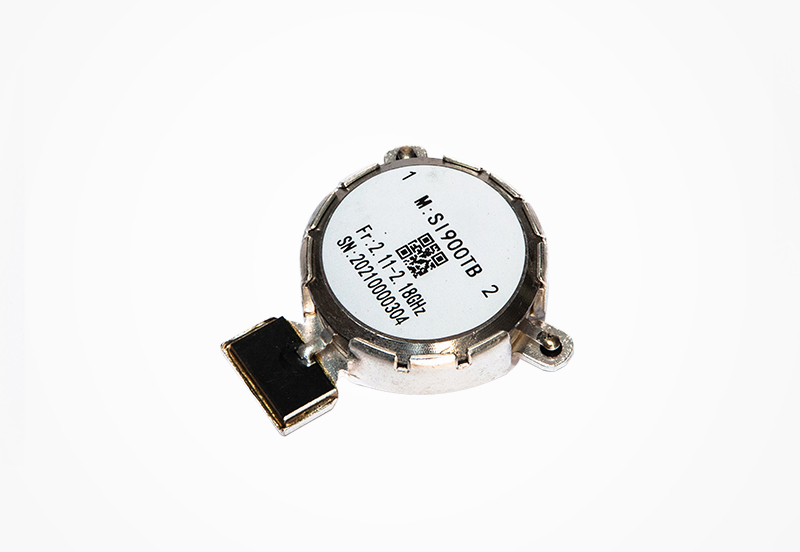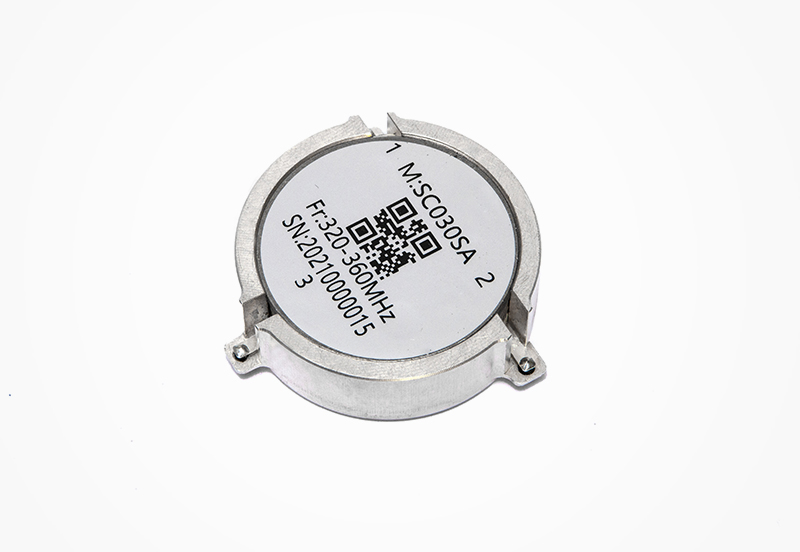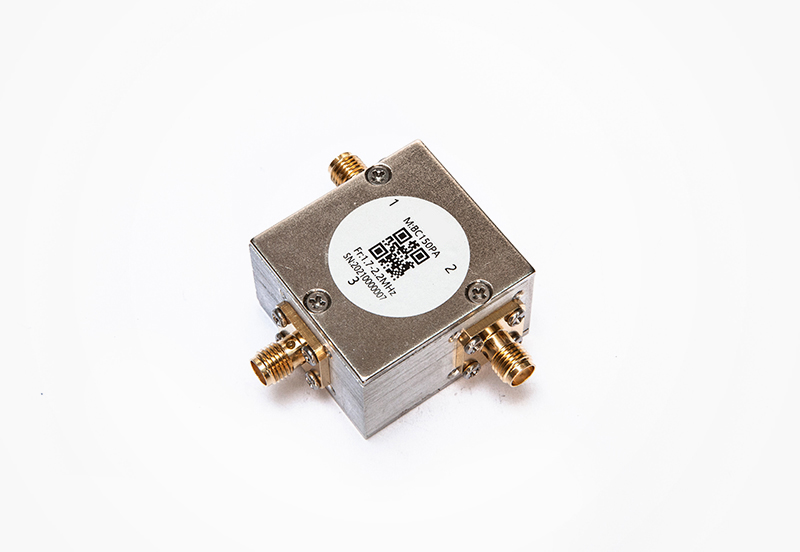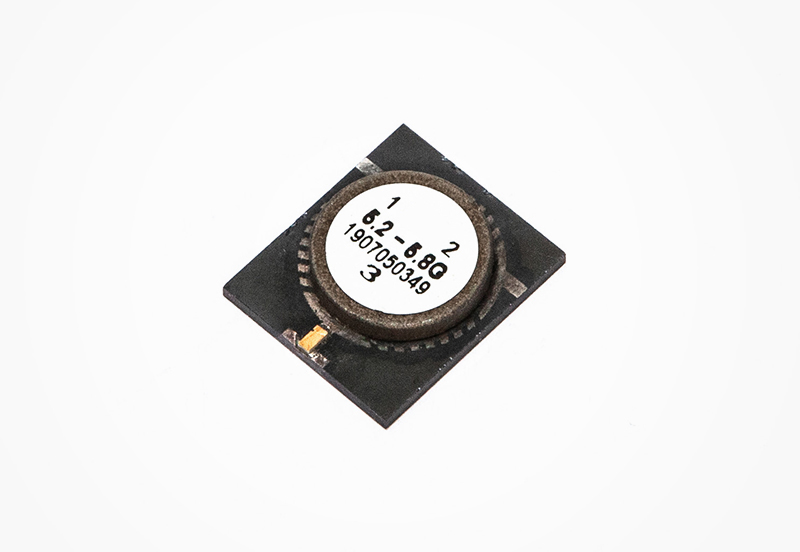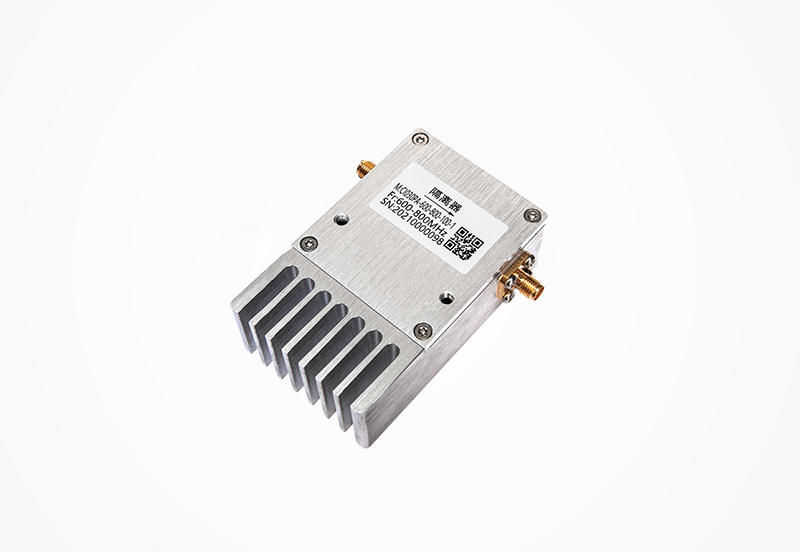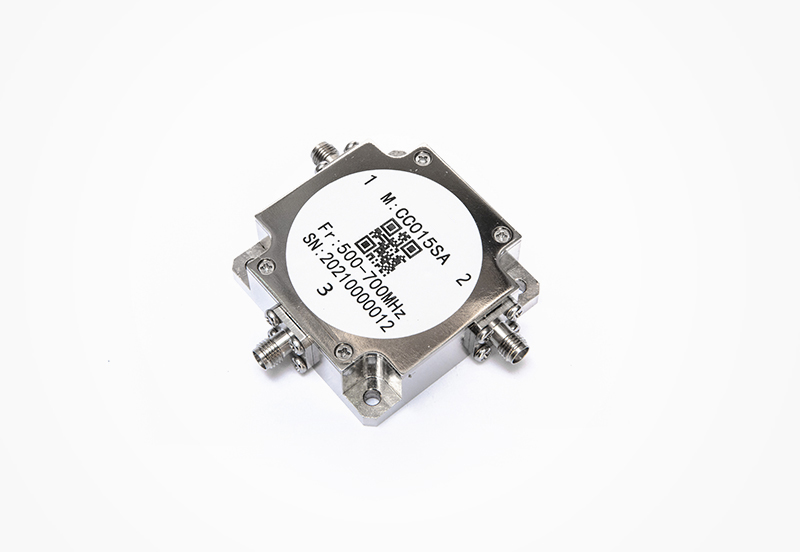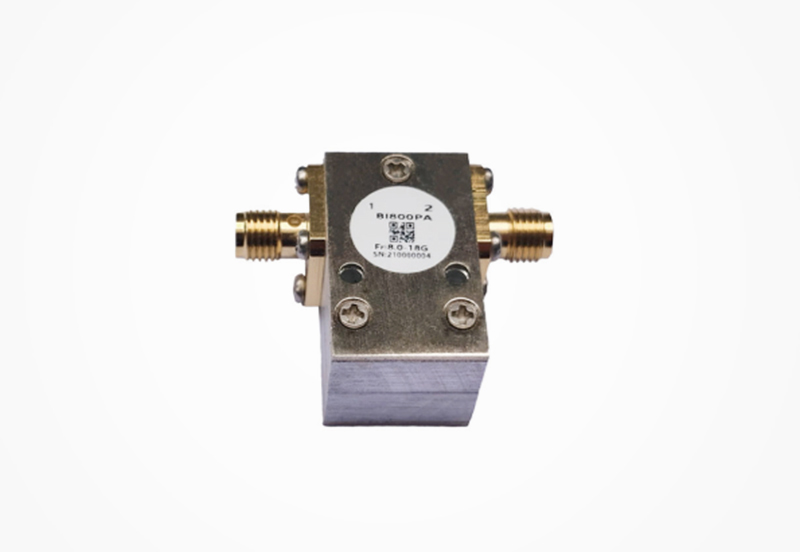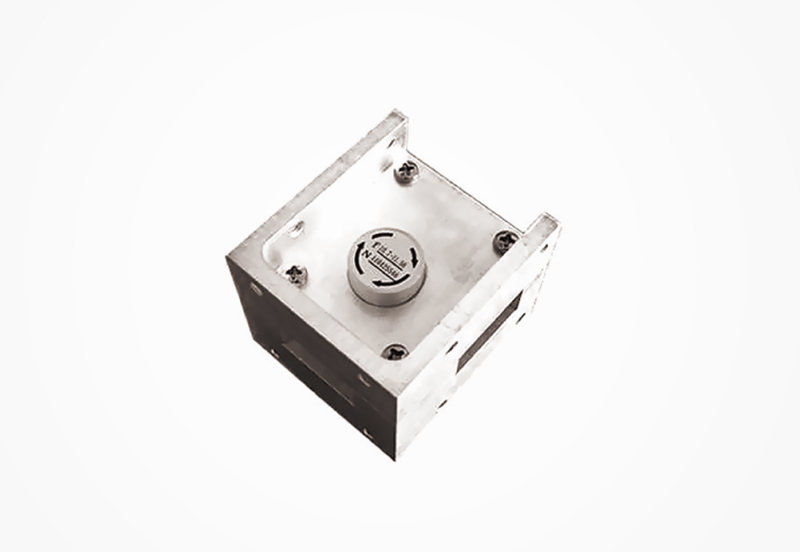




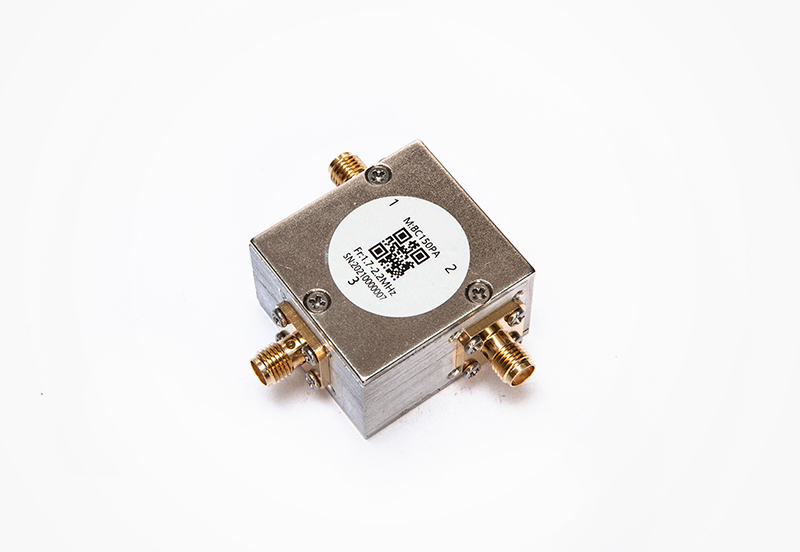
High isolation RF ferrite circulators are core non-reciprocal passive microwave components designed based on the Faraday rotation effect of ferrite materials, serving as key signal isolation and directional transmission units in modern RF communication systems. Unlike conventional standard circulators with ordinary isolation performance, high-isolation models adopt optimized doped Yttrium Iron Garnet (YIG) ferrite materials, such as terbium (Tb) or holmium (Ho) doped ferrite substrates, which raise the magnetic anisotropy field from the conventional 100 Oe to over 200 Oe. This material upgrade greatly enhances the suppression capability of reverse RF signals, fundamentally solving the problem of signal crosstalk and reverse interference in multi-port RF transmission. As a three-port directional transmission device, it strictly follows the unidirectional transmission rule of 1→2→3→1, ensuring forward signal transmission efficiency while achieving extreme reverse signal attenuation.
The core performance advantage of high isolation RF ferrite circulators lies in their excellent isolation indicators, which can stably reach 30dB to 40dB in the full operating frequency band, far exceeding the 20-28dB isolation of ordinary circulators. Meanwhile, precision impedance matching design and symmetrical junction structure optimization effectively control the insertion loss within an ultra-low range, avoiding the common defect of high loss caused by series isolation enhancement structures in traditional products. This balanced performance of high isolation and low insertion loss makes the device avoid signal power loss while thoroughly isolating reverse reflected signals, protecting precision RF front-end components such as power amplifiers (PAs) and low-noise amplifiers (LNAs) from burnout or performance degradation caused by reflected power.
In practical engineering applications, high isolation RF ferrite circulators are widely used in high-precision communication, radar detection, satellite communication and sensitive industrial RF systems. In duplex communication systems, they completely separate transmitting and receiving channels, eliminating self-interference between high-power transmitting signals and weak receiving signals, which is crucial for improving system signal-to-noise ratio and communication stability. In complex electromagnetic environment scenarios such as base station dense deployment and indoor signal coverage, their strong anti-interference ability suppresses adjacent channel crosstalk and multi-device signal mutual interference. Additionally, the all-passive structure requires no external power supply, featuring high reliability, long service life and strong environmental adaptability, which can stably operate in high temperature, high humidity and strong electromagnetic interference industrial scenarios, becoming an indispensable basic component of high-performance RF systems.


Contact Phone:
0755-26701085 0755-26701002
Company Address :2nd Floor, Building A, Juchuang Jingu Creative Park, Xili Street, Nanshan District, Shenzhen