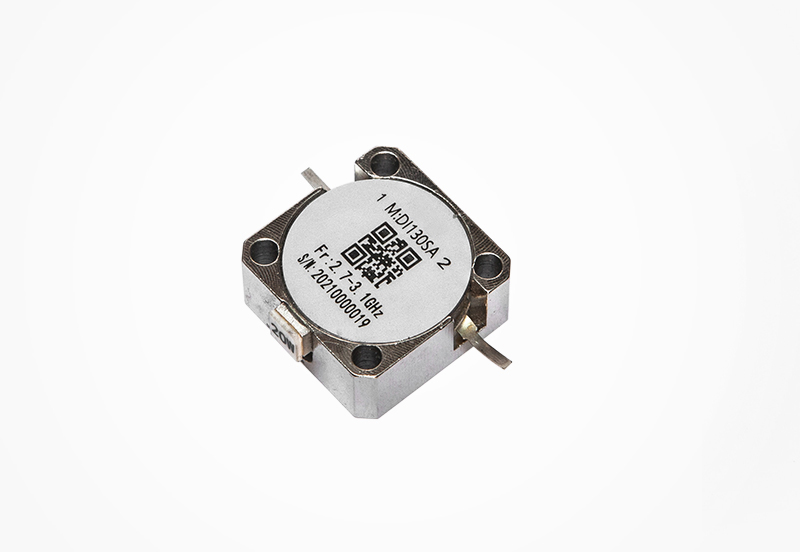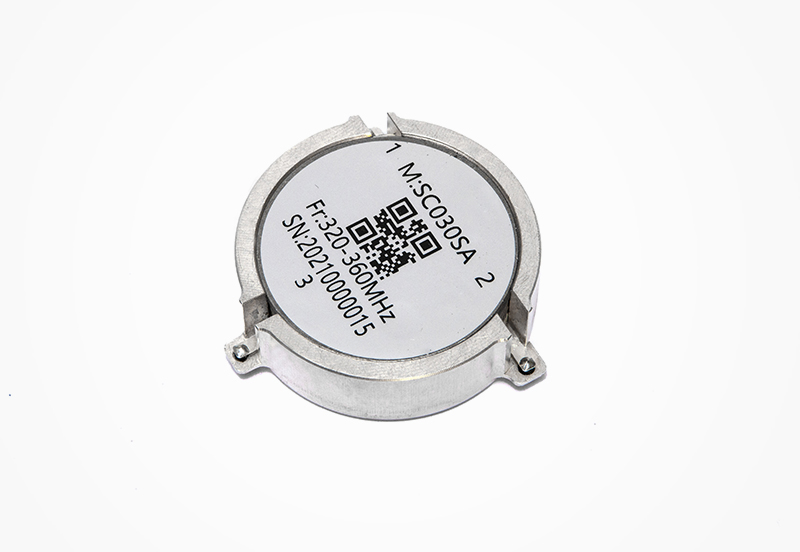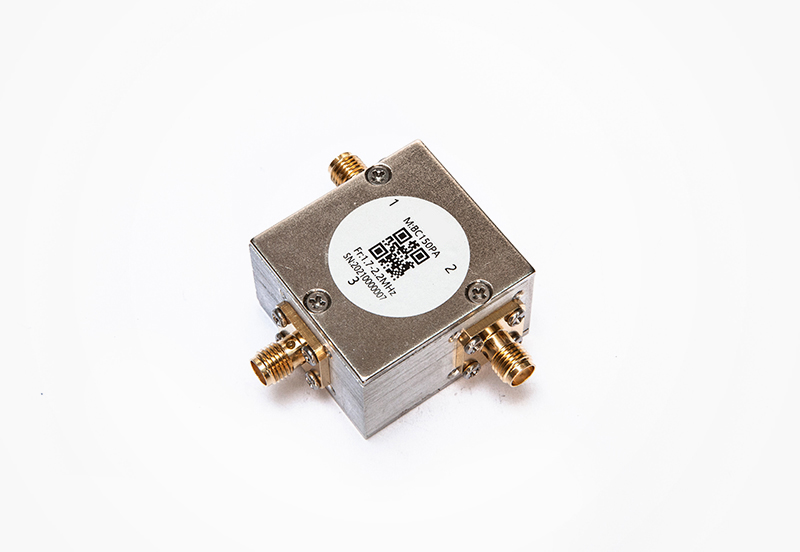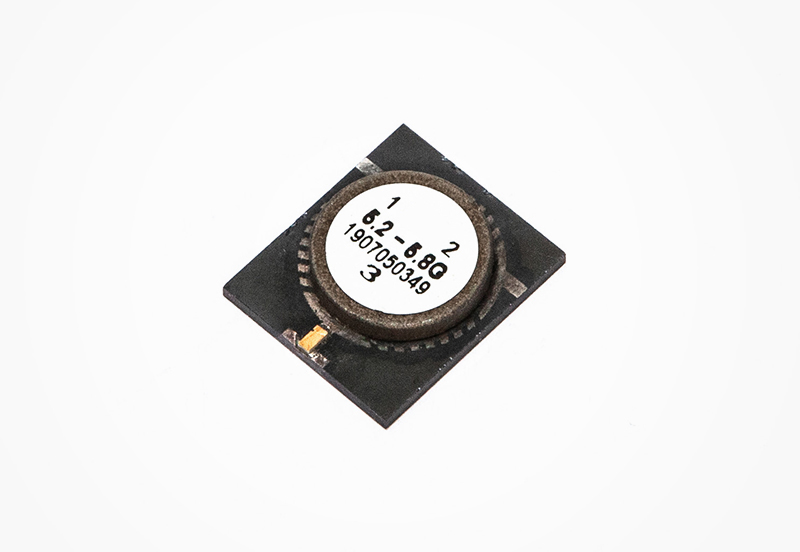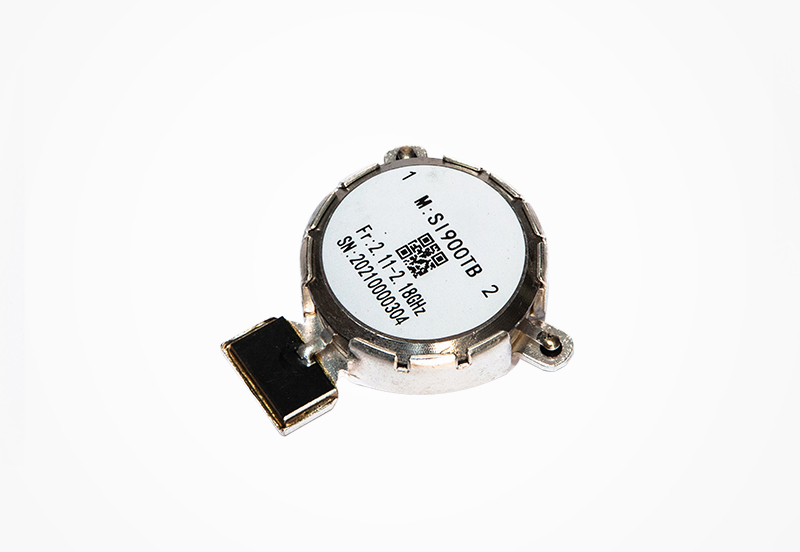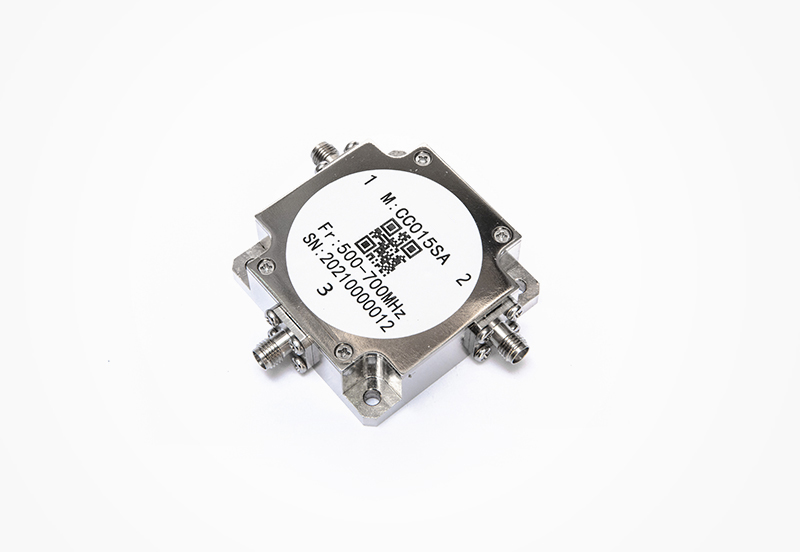




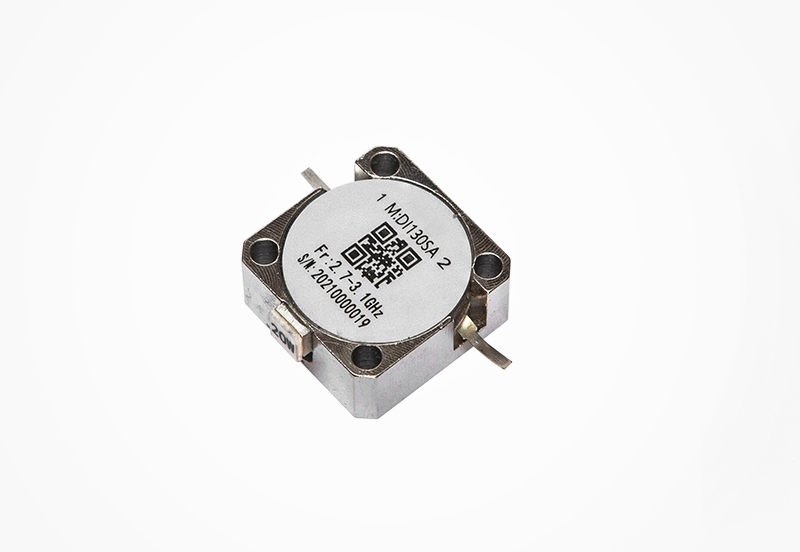
The 8GHz DCS RF isolator is a core passive microwave component tailored for global cellular communication systems, covering the classic DCS 1800 frequency band widely adopted by 2G GSM, 3G UMTS, 4G LTE and partial 5G NR networks. Operating on the principle of Faraday rotation effect, this two-port non-reciprocal device enables unidirectional RF signal transmission, allowing forward signals to pass through with minimal attenuation while strongly suppressing reverse reflected signals. As an indispensable part of cellular base station front-end systems, it solves the signal interference and component damage problems caused by antenna impedance mismatch, multi-path reflection and channel crosstalk in high-density cellular communication scenarios.
In practical cellular network deployment, signal reflection from antennas and surrounding building structures often leads to power amplifier (PA) distortion, standing wave fluctuation and receiver sensitivity degradation. The 8GHz DCS isolator effectively isolates reverse reflected power, stabilizes the operating status of core RF devices, and improves the overall linearity and signal purity of the communication system. It features low insertion loss, typically below 0.4dB, and high reverse isolation exceeding 20dB, ensuring no loss of effective cellular signal transmission while achieving reliable interference suppression. This performance is critical for maintaining stable voice calls, smooth data transmission and consistent network coverage in urban and suburban cellular areas.
Moreover, this DCS-band isolator is designed to adapt to long-term continuous operation of cellular base stations. It adopts compact and vibration-resistant structural design, with excellent environmental adaptability to cope with temperature changes and electromagnetic interference in outdoor base station environments. Compatible with mainstream cellular RF architectures, it can be flexibly integrated into macro base stations, micro base stations and distributed antenna systems (DAS). By optimizing signal transmission efficiency and reducing equipment failure rates, it significantly lowers cellular network operation and maintenance costs, making it a standard configuration for large-scale commercial cellular communication infrastructure construction and upgrading.


Contact Phone:
0755-26701085 0755-26701002
Company Address :2nd Floor, Building A, Juchuang Jingu Creative Park, Xili Street, Nanshan District, Shenzhen